listeners [2025]
How do technological objects shape urban space? And what information are
we unwillingly leaving behind?
We constantly move through a sea of radio signals.
Wi-Fi, Bluetooth, cell towers and satellites form
an invisible landscape that permeates our everyday
lives. These electromagnetic waves shape how we
communicate, move and live together, and yet we
never see them.
Who designs these networks? How exactly do they work and why do they work that way? How do they influence our movements, choices and freedoms? And how can we take matters into our own hands, not only as users, but as co-builders of the technological landscape? To understand how these systems work, we first make them visible.
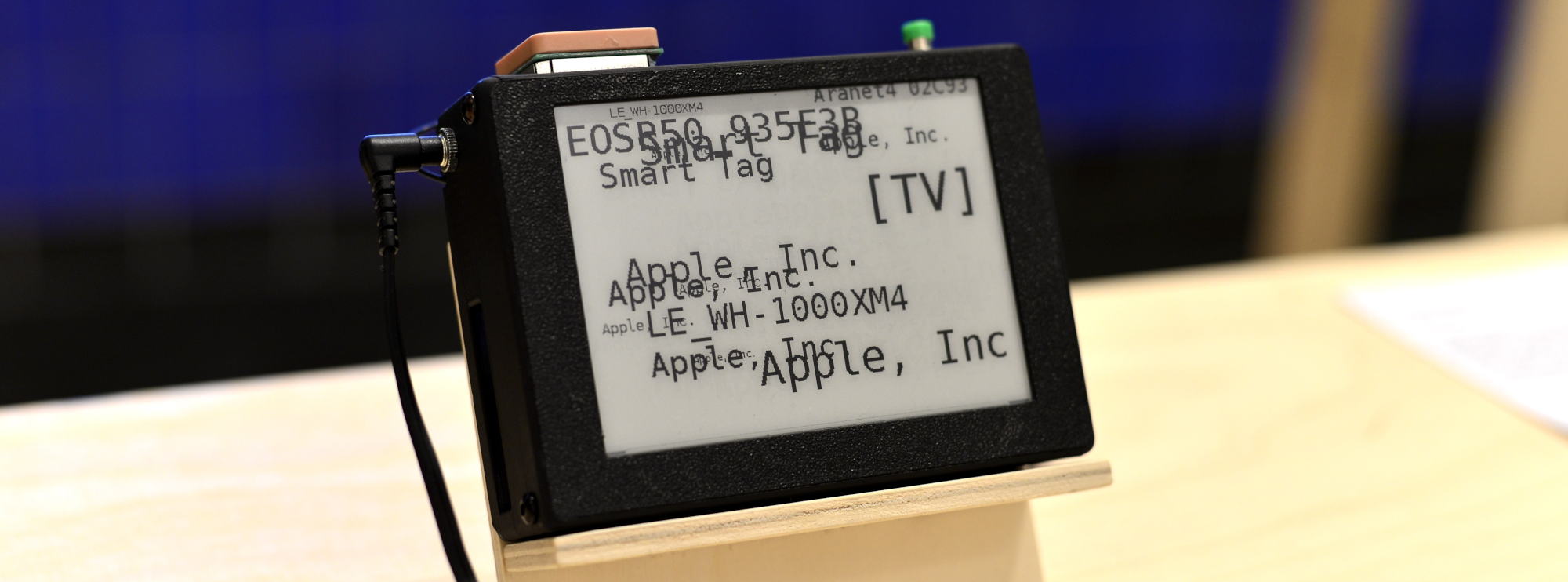
Listeners [2025] are devices made for sound- and signalwalks as explorations through the city. How do infrastructure and behaviour shape urban space? And what information are we unwillingly leaving behind?
media://
//the device >> electronics[raspberry pi zero, e-ink screen, GNSS module, audiocard, powerbank, push-button], software[python scripts], headphones
//the map >> electronics[raspberry pi, router], software[python, HTML/CSS, openstreetmap]
chris_ty